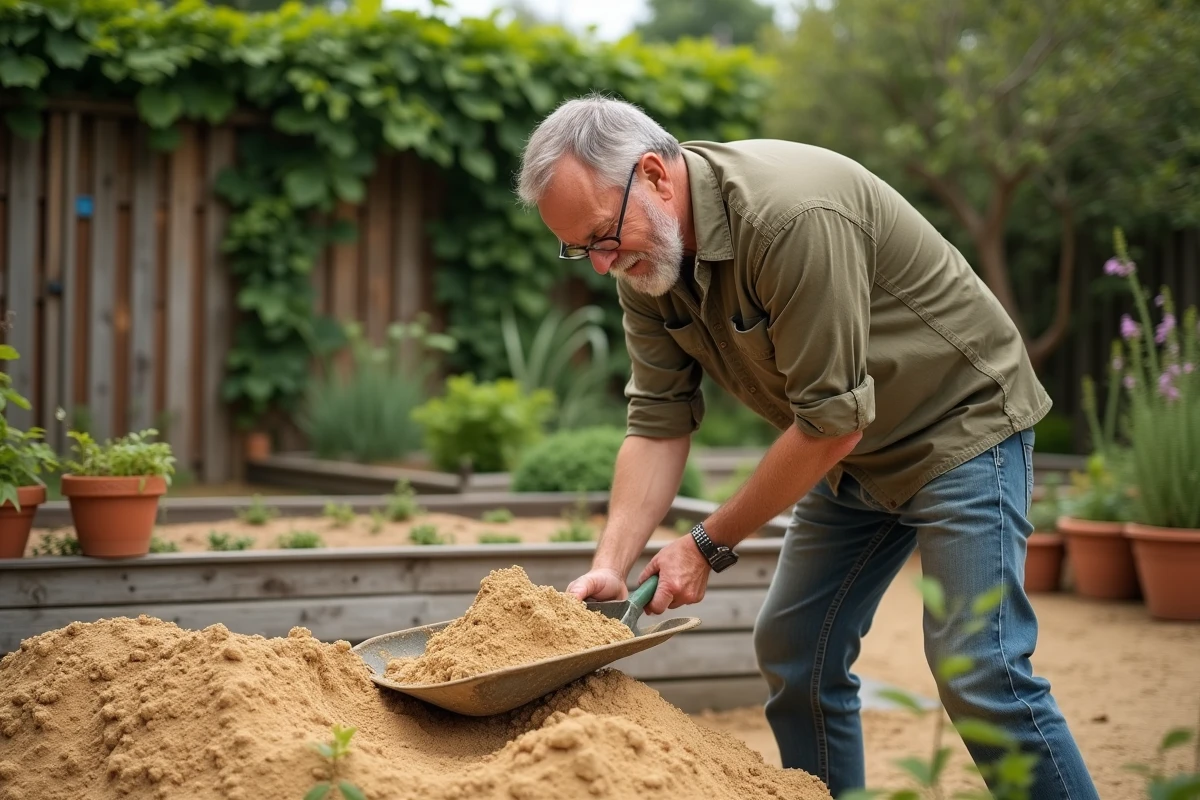
Getting sand for free is possible. However, not all sand is suitable for spreading in a garden. Before loading a trailer at a construction site or by a river, it’s essential to understand what this material contains, where it comes from, and what it might leave in your soil.
Urban construction sand in the vegetable garden: the real risks for your soil
Have you spotted a pile of sand left after roadworks or demolition? Before transporting it home, ask yourself a simple question: do you know what was built, stored, or treated at that location?
Sand from urban construction sites may contain residues of paint, adhesives, sealants, or industrial treatments. Deconstruction sand (for example, sand recovered during tile removal) is often very fine and draining, but INRAE warns that it requires prior rinsing to eliminate chemical residues.
For a flower bed or a path, the risk remains limited. However, in a family vegetable garden, these pollutants can migrate into the soil and then into the vegetables. If you are looking for a donation of sand for the garden, prioritize sources where the origin of the material is known and documented.
Since 2025, a regulatory change has also imposed a mandatory declaration for the transport of construction sand beyond one cubic meter. This traceability aims specifically to prevent soil contamination by industrial pollutants. Even for small volumes, always ask the donor for the exact origin of the sand.
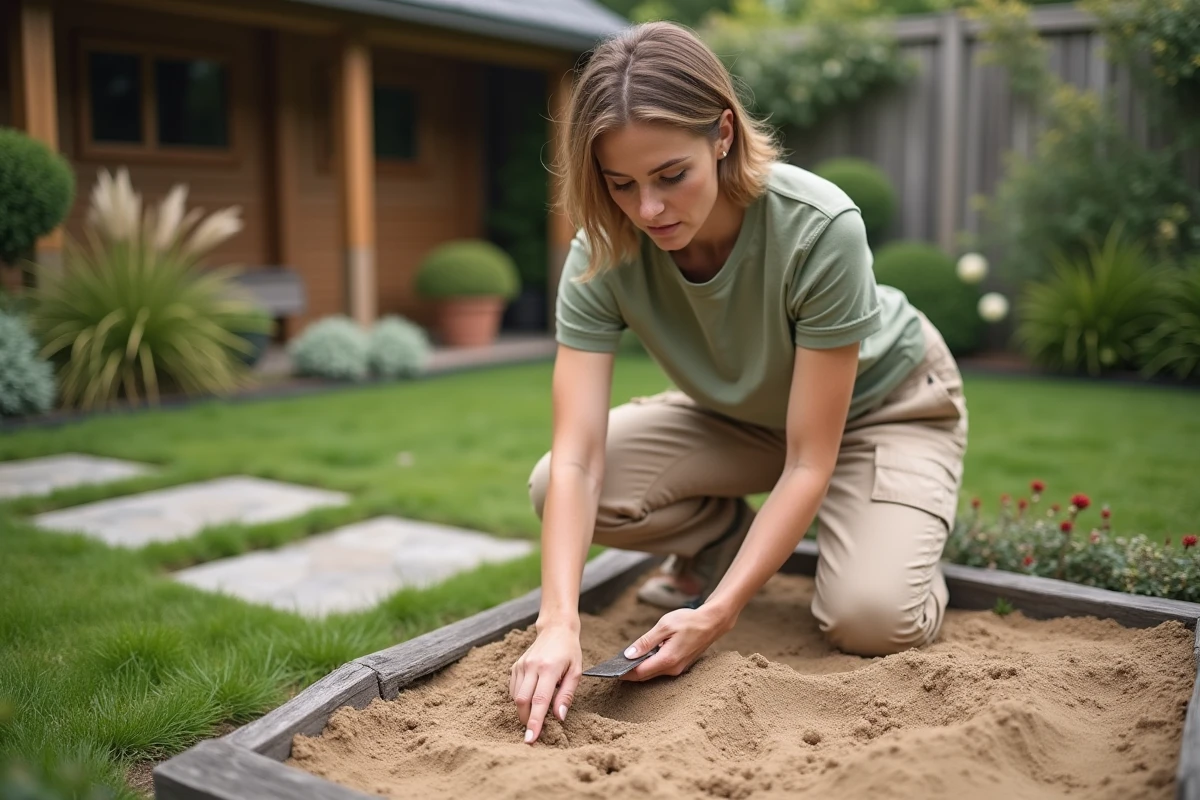
Free sand recovery: reliable sources to know
Construction sites are not the only option. Several channels allow you to recover clean sand, provided you know where to look.
Surplus from municipal public works
After road or earthworks, municipalities often end up with excess sand. A call to your town hall’s technical service is sometimes all it takes. These surpluses are generally calibrated sand, purchased by the community, so the quality is known.
Material exchange platforms between individuals
Local websites and groups allow individuals to offer their leftover construction materials. You can find construction sand, gravel, and sometimes compost. Check that the donor can specify the type of sand (alluvial, crushed, quarry) and its initial use.
Contractors and earthmoving companies
Earthmoving and construction professionals pay to dispose of their surplus. Offering to recover it directly on-site saves them transportation costs. It’s a win-win negotiation, provided you come with your own vehicle.
- Town hall and technical services: road sand is often clean and calibrated, available after seasonal projects
- Local collaborative platforms: construction surplus between individuals, to be verified on a case-by-case basis
- Contractors and earthmovers: sometimes significant volumes, recovery on-site with your trailer
- Neighborhood and mutual aid networks: leftover materials from outdoor renovations, often in small quantities
Beach or river sand: why it’s a false good idea
Collecting sand by the water seems free and easy. In practice, it is both risky and often prohibited.
Extraction in natural areas has been subject to increasing restrictions for several years, to protect coastal and riparian ecosystems. Riverbanks and beaches play a role in water filtration and soil stabilization. Extracting sand contributes to erosion.
From a health perspective, amateur gardeners report skin allergies after using untreated beach sand, linked to residual salt and microorganisms. Salt, even in small amounts, degrades the structure of garden soil and hinders plant growth.
If you insist on using natural sand, a thorough rinsing with clear water is the bare minimum. For a vegetable garden, this type of sand is still not recommended: prefer sand of controlled origin, even if recovered for free through the channels described above.
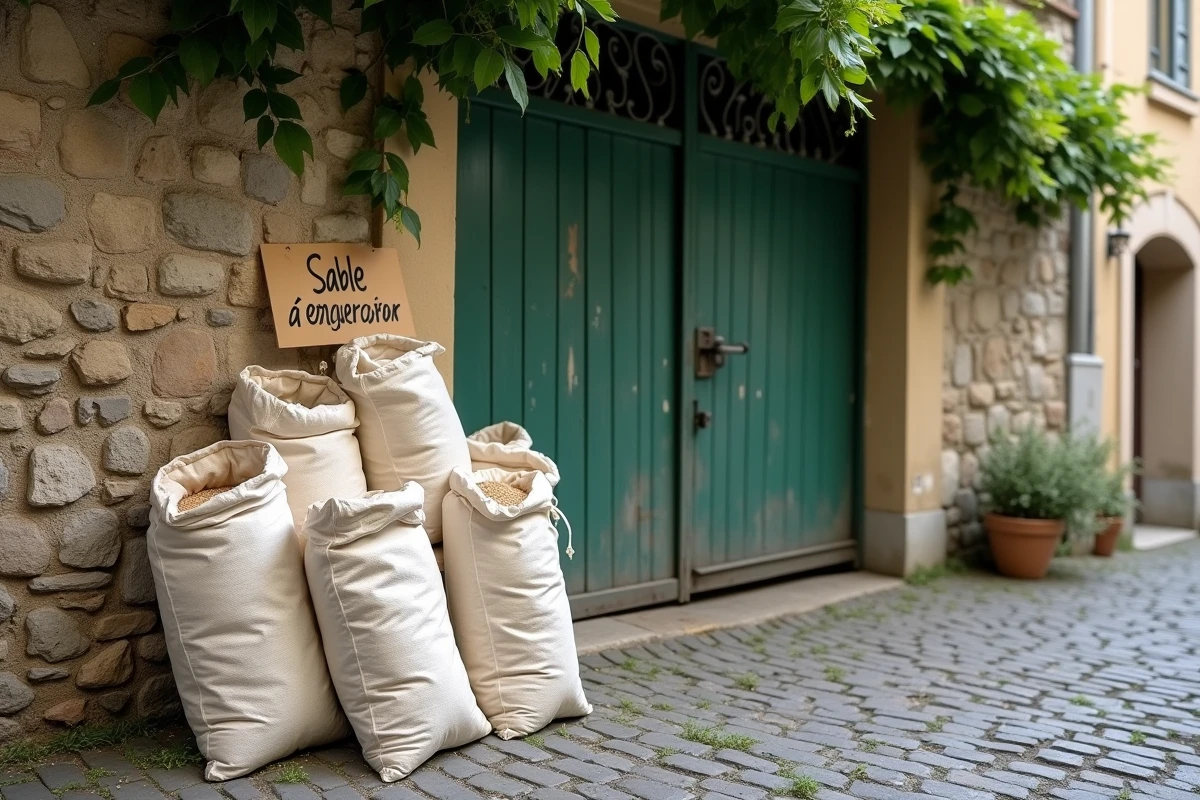
What type of sand to choose according to its use in the garden
Not all sands are equal. Their grain size and composition determine what you can do with them.
Alluvial sand (round grains, from rivers or alluvial quarries) improves the drainage of clay soil. When mixed with garden soil, it aerates the substrate and facilitates plant rooting. It is the most versatile for gardening.
Crushed sand, with angular grains, compacts better. It is suitable for stabilizing a path, setting borders, or laying slabs. However, it does not add much to a growing soil.
- Paths and walkways: crushed sand, laid on geotextile to limit weeds
- Amendment for clay soil: alluvial sand mixed with soil and compost
- Play area or decorative zone: washed sand, of medium grain size, without fine dust
Before incorporating free sand into your crops, a simple test helps identify problems: fill a jar one-third full of sand, add water, shake, then let it sit. If the water remains cloudy or colored after several hours, the sand likely contains fine clays or suspicious particles. Clean sand will yield clear water in a few minutes.
Recovering sand without paying requires a bit of method, not a budget. The real savings come from verifying the source, adapting the type of sand to your project, and avoiding dubious sources. Poorly chosen sand can cost much more in soil damage than a bag bought at a garden center.