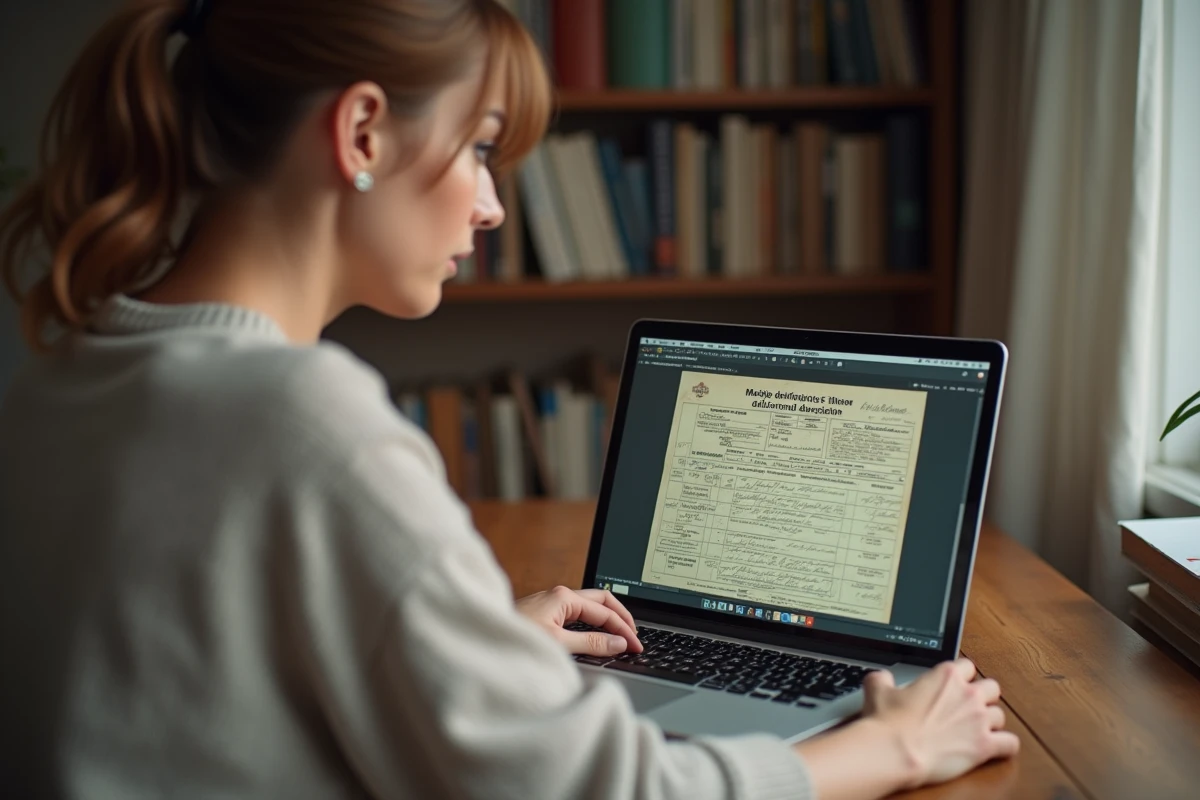
Accessing digitized civil status records sometimes feels like a controlled lottery: each department sets its own rules, some throw the door wide open, while others let the archives trickle out, often at the whim of local policies. Mandatory registration here, direct access over there. Publication timelines stretch or tighten, and the completeness of the collections rarely depends on your patience.
Public sites remain free, even though private companies try to carve out a niche by offering paid access to data that is often already available elsewhere at no cost. Access may face limitations: documents that are too recent, protected to preserve privacy, are locked. A few national tools aggregate some of these archives, but the key to the vault remains the portal of each department.
Understanding the Importance of Online Civil Status Archives for Your Research
Civil status archives form the foundation of family histories, local identities, and the collective narrative. These civil status registers available online allow you to find a birth certificate, a marriage, a death; they reveal family ties, the paths of a lineage, confirm parentage, or specify a date, a place, sometimes even a forgotten trajectory. Genealogists and population researchers rely on these reliable sources, open to all, which require nothing more than curiosity and time.
In the past, one had to pass through the doors of the town hall or roam the halls of the departmental archives. Today, these online archives have changed the game for historians, genealogy enthusiasts, amateur or knowledgeable archivists. Parish registers, decade tables, communal or departmental collections: these documents paint a living picture of society through “births, marriages, deaths.”
Using these digital databases requires method and rigor. Civil status acts, structured around marginal notes, date, and place, reveal individual destinies. To navigate, the page free online civil status archives on “How to Consult a Person’s Civil Status for Free – La Télé de Gauche” explains the steps to follow to effectively query these collections and understand the workings of the repositories.
Finding a civil status act, comparing online parish registers, utilizing decade tables: each step refines the understanding of a family or collective past. Departmental archive platforms structure this work and guarantee public access to these resources.
What Steps to Follow to Access Departmental Registers for Free?
To access civil status registers online, it all starts on the digital portal of each public service department. Almost all departmental archives now offer a dedicated site, facilitating searches in decade tables, parish registers, and civil status records, often with free access.
Before you begin, it is essential to identify the city or town in question. Archive sites generally offer navigation by municipality, allowing you to target a specific period. Depending on the portal, you will navigate via an interactive map or an alphabetical list.
To find a birth certificate, marriage, or death, select the desired period and type of act. Communication deadlines apply: one hundred years for births, seventy-five years for marriages and deaths. If an act is not available online, you must request it from the relevant town hall, either by form or by mail.
Here are three steps to move forward without wasting time:
- Consult the decade tables to quickly target a date or a person.
- Access the full copy of an act if regulations allow it.
- Use search filters by name, date, or type of act to increase efficiency.
Some archive sites require free registration to consult the acts, but access remains open to all. The digitized archives faithfully reproduce the old registers, page by page. For those who want to conduct a serious investigation into their family history or the history of a town, these online resources are a goldmine of information.

Practical Tips for Effectively Utilizing Digital Archive Platforms
Browsing the departmental archive sites requires method and perseverance. The online civil status registers are not always fully indexed. Start with the decade tables, which allow you to quickly spot a period or a name: a real time saver, especially for research on births, marriages, deaths.
If the site offers a search by name, use it without hesitation. Some portals facilitate filtering by municipality, type of act, and period. When indexing is available, navigation becomes easier, avoiding the need to flip through entire registers page by page. In search of distant ancestors, online parish registers are invaluable, provided you know the spelling variations of surnames.
To structure your research, here are some practices to adopt:
- Always note the date and place of any act found, key markers to verify or complete your work.
- If indexing is lacking, the handwritten summaries present in some registers can be useful.
- Consider cross-referencing the communal collection and the departmental collection: discrepancies exist, sometimes due to losses or gaps in the collections.
The diversity of departmental archives implies different interfaces, each with its peculiarities. Adapt to each site. Cross-referencing sources, municipal archives, civil status registers, parish registers, strengthens the reliability of your discoveries. Document precision remains the best ally to take advantage of online civil status.
Every search in the online civil status archives holds its share of surprises and emotions: at the turn of a register, a name may suddenly emerge that connects the past to the present, a detail that changes the perspective. The archives are open; you just need to dare to turn the page.