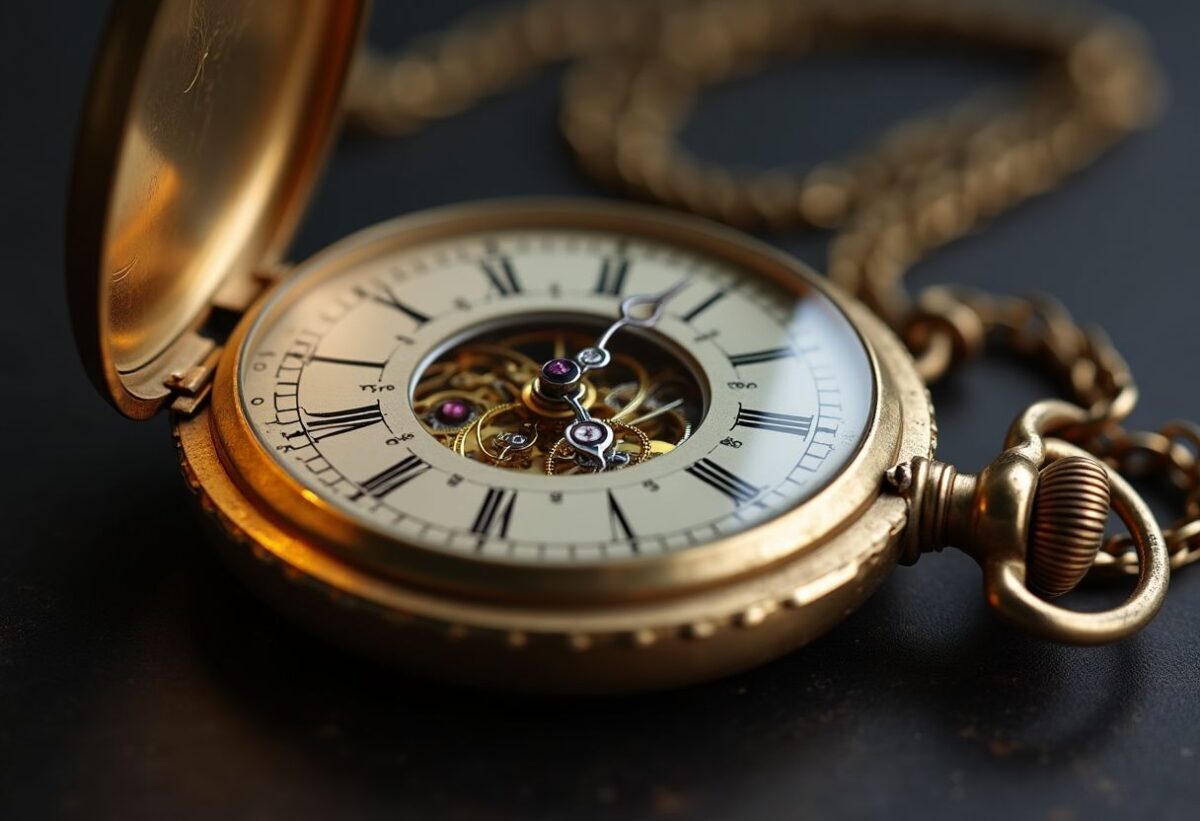
The pocket watch, this little jewel of mechanical precision and refined design, is much more than just a tool for measuring time. It embodies a rich history and a timeless aesthetic, making it a coveted object for many collectors and vintage enthusiasts. In an era where modern technology disrupts our relationship with time, these antique watches continue to fascinate, due to their mechanical complexity and artisanal beauty.
A Brief History of the Pocket Watch
To understand the appeal of the pocket watch, it is essential to look into its past. Originating in the 16th century, it saw particular growth in the 19th century, becoming an essential accessory in men’s wardrobes.
- The first pocket watches: The earliest versions of this accessory, often bulky and inaccurate, were more regarded as symbols of social status than practical tools.
- The evolution over the centuries: With advancements in watchmaking technology, the pocket watch evolved to become more precise and portable, facilitating its adoption by a broader audience.
- A symbol of modernity: Throughout the 19th century, the pocket watch was integrated into daily fashion and became a symbol of refinement and modernity.
The Mechanical Components of the Pocket Watch
What truly distinguishes the pocket watch is its complex mechanics. Each component plays a fundamental role in the harmonious functioning of this time-measuring instrument.
The internal structure of these watches is a true masterpiece of engineering. The movement, often referred to by watchmakers, consists of a series of precise gears that work together to measure the passage of hours and minutes.
The dial displays this information clearly and elegantly, while the hands, often meticulously adorned, further enhance the overall aesthetic.
The protective casing, or case, often made from precious materials such as gold or silver, provides protection and adds a touch of luxury.
The Associated Rituals and Accessories
Beyond the object itself, the pocket watch is associated with rituals and accessories that enrich its daily use and maintenance.
- The chain: An essential element, it secures the watch in the pocket and can be adorned with charms or seals, adding a personal touch.
- The winder: Used to set and wind the watch, this accessory highlights the care and attention required for the maintenance of each piece.
- The storage boxes: A collectible item in itself, they protect the watch when not worn, reflecting the importance given to its preservation.
- The daily rituals: Wearing a pocket watch means engaging in a daily ritual of care and maintenance, strengthening the bond between the user and their time-measuring instrument.
Why Collect Pocket Watches?
In a world dominated by digital precision, the appeal of the pocket watch lies in its ability to tell a story. Each piece is unique, bearing the marks of time and previous owners.
Collecting pocket watches is a passion that combines history, aesthetics, and mechanical craftsmanship. These objects often bear witness to a bygone past, offering a fascinating glimpse into the trends and technology of earlier eras.
For enthusiasts, each watch is a work of art, a tangible representation of the craftsmanship and precision of a time when every second counted.
Moreover, they constitute valuable investments, often appreciating in value over the years.
For those looking to embark on this adventure, here are some pocket watch tips to start their collection.