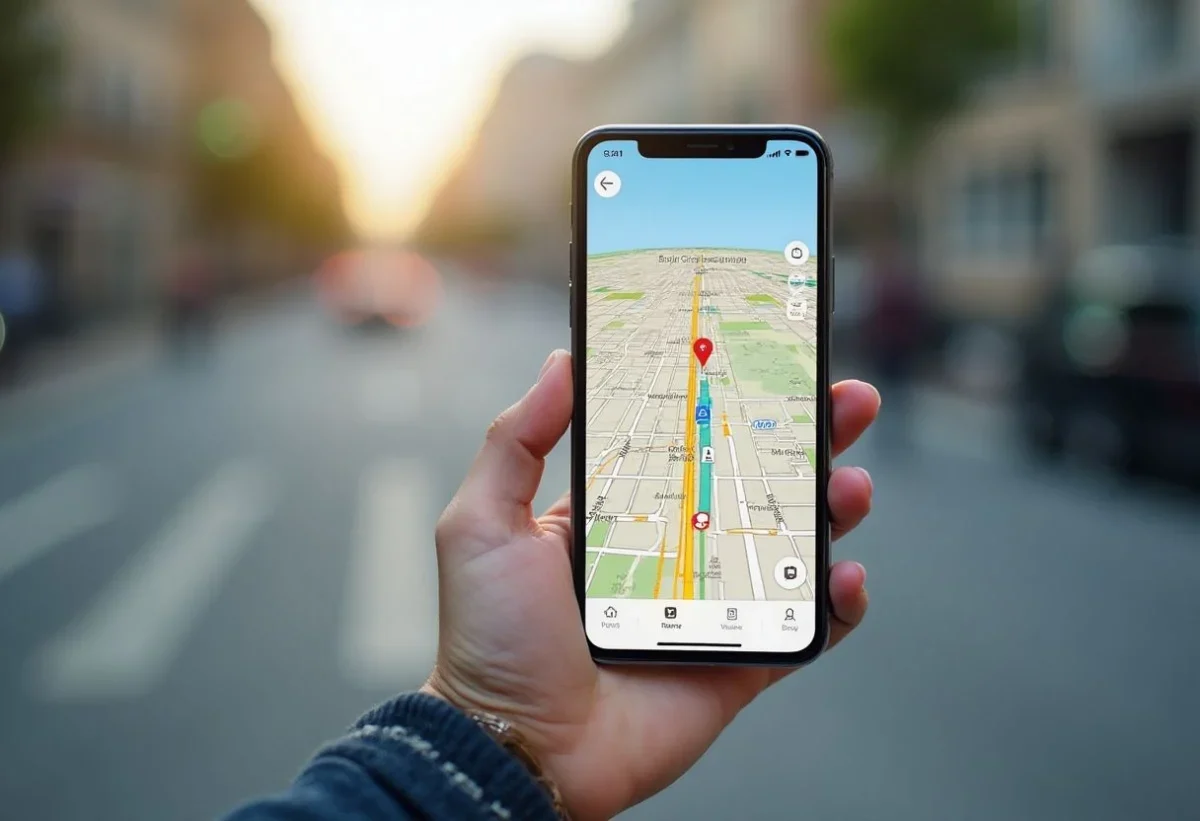
In a world where connection is king, understanding how geolocation works becomes essential. This technology, which has revolutionized our daily lives, has become an indispensable tool. From navigation apps to delivery services, and even more specific services like pet tracking, geolocation has redefined how we interact with our environment. Despite its omnipresence, the principles underlying this technology often remain unknown.
The Basics of Geolocation and Its Fundamental Operation
To understand geolocation, it is vital to grasp how it accurately determines a position. This technology relies on a few key principles that allow for the establishment of a mobile device or object’s location at a given point on the planet.
- Global Positioning System (GPS): at the heart of geolocation lies GPS, a network of satellites orbiting the Earth. These satellites send signals that are received by GPS devices on the ground. By measuring the time it takes for these signals to arrive, the device can calculate the distance to each satellite and thus triangulate its exact position.
- Triangulation and Trilateration: while triangulation uses angles to calculate position, trilateration relies on distances. By combining distances to at least three satellites, a device can determine its precise location in three dimensions.
- Network and Wi-Fi Enhancements: anticipating limitations in dense urban environments, signals from cell towers and Wi-Fi access points can complement GPS data to refine location accuracy.
The Different Techniques and Technologies of Geolocation
Geolocation is not limited to a single technology. It integrates various methods that ensure accuracy and reliability, adapting to the diverse needs and constraints of users.
Bluetooth Low Energy (BLE): used particularly in location beacons, BLE allows for indoor positioning by emitting low-range signals, ideal for enclosed environments.
Radio Frequencies and RFID: these technologies rely on radio waves to exchange data. RFID devices can be used to track objects in confined spaces, offering a quick and cost-effective solution.
For those looking to deepen their knowledge about the benefits of this technology, it is recommended to consult specialized resources, including by checking out this article that explores its advantages in more detail.
Geolocation and Privacy: A Complex Relationship
While geolocation offers many benefits, it also raises delicate questions regarding privacy. Users must navigate between the benefits and the risks associated with this omnipresent technology.
- Data Collection: geolocation relies on the continuous collection of location data, a reality that raises privacy concerns. Companies must ensure that this data is protected and used ethically.
- Consent and Transparency: to respect users’ privacy, applications and services must obtain explicit consent and clearly inform how the data will be used.
- Protection Solutions: tools exist to help users control their location, such as disabling geolocation services or using virtual private networks (VPNs).
Geolocation, a technology that is magical in many ways, has become indispensable in our modern lives. Understanding its foundations allows for a better appreciation of its capabilities while remaining aware of the privacy issues it raises.