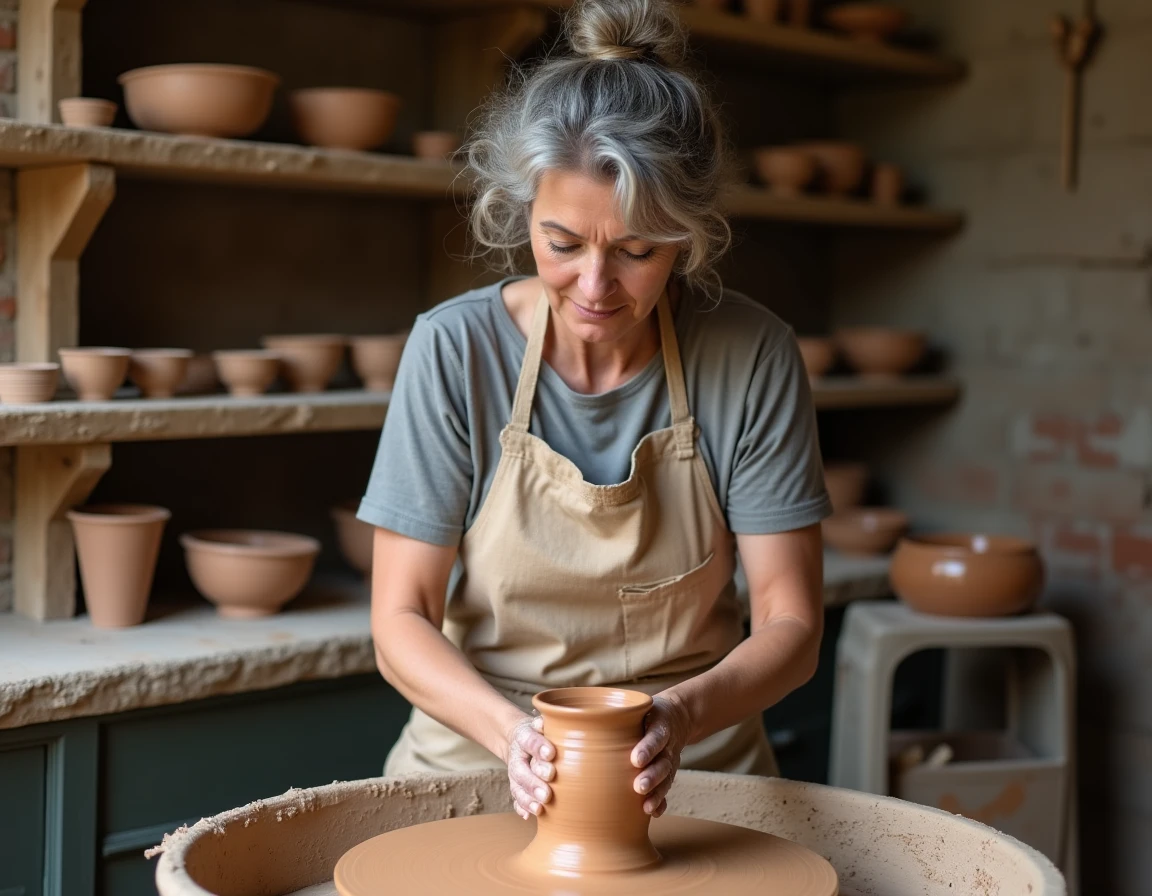
A lathe that vibrates at the center, a wheel that sticks after each session, a motor that overheats after twenty minutes: these signals often appear well before a breakdown. They indicate a maintenance issue or a neglected adjustment, not the end of life. Taking care of your pottery wheel daily changes the consistency of turning and extends the machine’s lifespan by several years.
Brushless motor and direct drive: what changes for the lathe’s lifespan
On a classic belt lathe, you eventually have to replace the belt and the motor brushes. Recent models with brushless direct drive motors eliminate these two wear parts. The torque remains stable even at low speeds, making it easier to center heavy pieces without straining the mechanics.
In practical terms, we gain on two fronts. The first is consistency: no belt slippage when loading the wheel. The second is maintenance, reduced to simple cleaning since there are no transmission parts to monitor. The Shimpo and Skutt catalogs published between 2023 and 2024 confirm this shift towards brushless in their mid-range and professional lines.
The transition to a power supply with a wide voltage range (compatible with 100-240 V) often accompanies this evolution. Built-in protections against surges and overheating limit breakdowns related to network fluctuations, a point to check in a shared workshop where multiple machines operate simultaneously.
Before investing, it is worth looking to optimize your current pottery wheel with rigorous maintenance, as a well-maintained belt model remains reliable for many years.
Cleaning protocol after each turning session
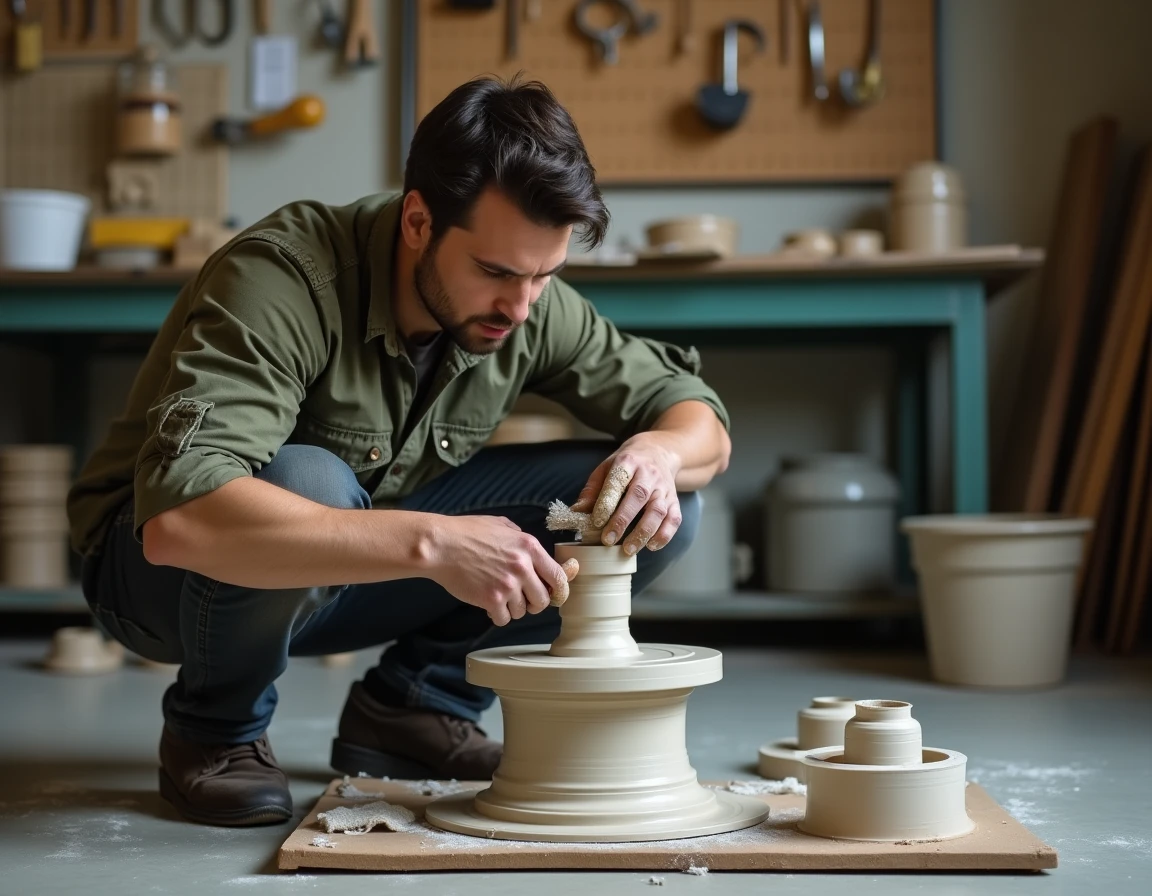
Slurry is the silent enemy of the lathe. It seeps under the wheel, hardens around the axle, and eventually seizes the bearings. The basic rule: never let slurry dry on the axle or under the head.
Wheel and splash pan
After each session, remove the wheel (or bat) and wipe the contact surface with a damp sponge. Rinse the splash pan with clear water. Avoid pouring clay-laden water directly into the sink: a settling bucket protects the plumbing, and the clay residues collected can be recycled.
Axle and collar
The central axle deserves a wipe with a damp cloth after each use. If clay has dried, a little warm water is enough to soften it before scrubbing. Forcing with a metal tool risks scratching the surface and accelerating future buildup.
Scheduled preventive maintenance: bearings, electronic board, pedal
Several manufacturers (Shimpo, Skutt, Brent) now publish scheduled maintenance protocols in their manuals. Ignoring these routines can significantly shorten the machine’s lifespan and, often overlooked, void the manufacturer’s warranty.
Here are the checks to schedule:
- Monthly cleaning of the wheel and axle, with a visual inspection of the seals if the model has them.
- Annual inspection of the bearings: turn the axle by hand, with the motor off. A rubbing noise or lateral play signals a bearing that needs replacing before it damages the axle.
- Dusting the electronic boards and pedal unit once or twice a year with dry compressed air. Clay dust is conductive when wet and can cause short circuits.
The pedal deserves special attention. Feedback varies on this point depending on the brands, but a pedal that responds in jerks often indicates a dirty potentiometer rather than an electronic fault. Cleaning with contact cleaner resolves the issue in most cases.
Adjusting the workstation and posture: a longevity factor often overlooked
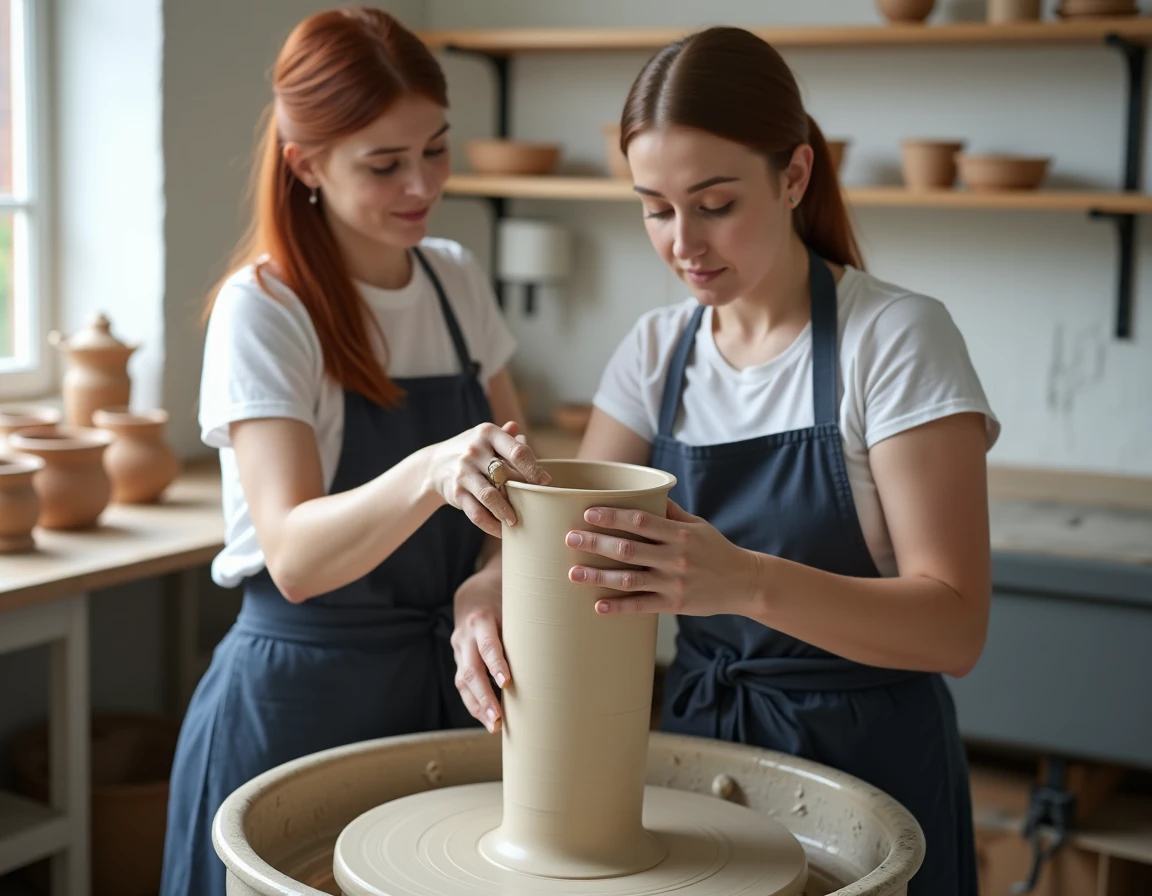
We rarely think about the link between the potter’s posture and the wear on the lathe. A seat that is too high or too far away forces you to press harder on the pedal and applies asymmetric pressure on the wheel. The result: the pedal and bearings endure unnecessary stress.
The seat height should allow the elbows to rest slightly above the center of the wheel, with relaxed arms. The knees should frame the splash pan without squeezing. This position reduces muscle fatigue and, directly, the force transmitted to the mechanical components.
Stability of the lathe on the floor
A lathe that moves on an uneven floor generates unwanted vibrations that the motor constantly compensates for. Stabilizing the feet with anti-vibration pads (available at hardware stores) stabilizes the whole setup and reduces the mechanical load on the axle and motor. On a raw concrete floor, a simple rubber mat makes a difference.
Choosing the right rotation speed according to the turning stage
Turning consistently at full speed is the most costly reflex for the mechanics. Centering requires high torque at moderate speed. Wall building is done at medium speed. Finishing and trimming require slow and steady rotation.
Adapting the speed to each stage reduces the strain on the motor and limits overheating. On a brushless motor, torque remains available at low speeds without power loss. On a classic motor, forcing at low speed for long minutes accelerates brush wear.
The consistency of the clay also plays a role: overly soft clay requires more corrections and thus more time under motor strain. Preparing the clay to the right firmness before placing it on the wheel protects both the pieces and the machine.
A well-maintained pottery wheel is not distinguished by its brand or price, but by the consistency of the attention given to it. The actions described here take a few minutes per session and a few hours per year. The return is measured in additional years of turning and consistency of each piece produced on the wheel.