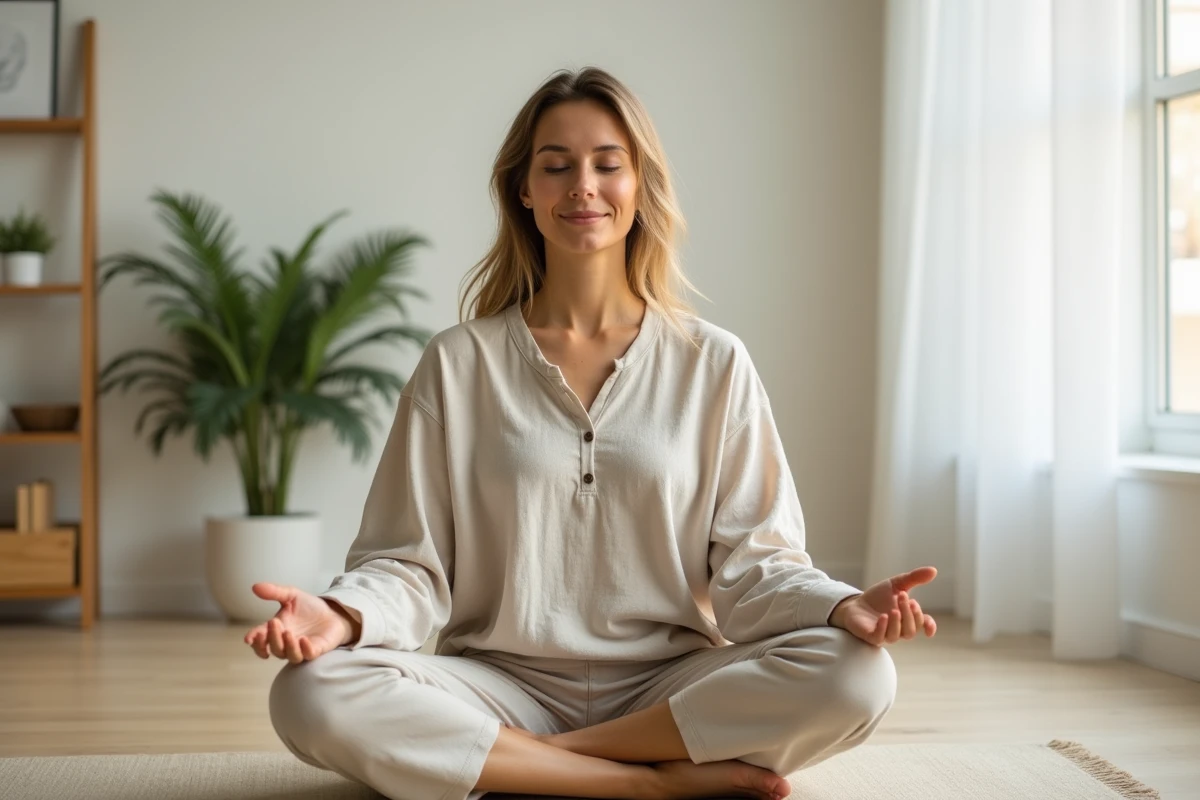
Mental health declared a National Cause, documented link between nature and psychological well-being, rise of medical misinformation online: health and wellness news in France is structured around recent data that deserve to be read side by side rather than separately. What are the measurable facts behind these trends, and what do the gaps between them reveal?
Mental health, nature, and misinformation: the data to compare
| Health trend 2026 | Type of initiative | Target audience | Main tool or lever |
|---|---|---|---|
| National Cause 2026: mental health | Interministerial plan | General public | Mental Garden platform (free) |
| Contact with nature and body image | International study (over 50,000 participants) | Adults aged 18 to 99 | Self-compassion, mindfulness |
| Health misinformation | Expert alert (Pr Mathieu Molimard) | Digital users | Call for a coordinated response |
The table highlights a rarely emphasized point: two of these three trends rely on individual levers (connecting with nature, verifying sources), while the third mobilizes a state mechanism. The question of the complementarity between public action and personal behaviors runs through all recent health news.
To cross-reference these topics with others such as nutrition, sleep, or body care, the information available on Aux Portes de la Santé covers a broad and regularly updated spectrum.
National Cause 2026: what the Mental Garden platform changes
Mental health is not a new topic in the French public debate, but its elevation to the status of National Cause 2026 alters the scale of the response. The interministerial mobilization plan that accompanies this decision aims to coordinate actors who have been dispersed until now: ministries, health professionals, associations.
The flagship tool of this system, the free Mental Garden platform, has been designed to inform and support the general public. Its positioning differs from that of existing helplines: it is a structured information portal, supported by the government, that centralizes resources on psychological well-being.
What distinguishes this initiative from previous awareness campaigns is the interministerial nature of its management. Mental health is no longer confined to the Ministry of Health: the Ministry of Agriculture, for example, actively promotes the initiative, indicating that the targeted audiences include professional populations often distanced from traditional care pathways.
Limits to watch
An information portal does not replace a consultation. Access to psychologists remains unequal across territories, and the free nature of a website does not resolve the shortage of practitioners in certain rural areas. The real effectiveness of Mental Garden will be measured by its ability to direct users towards concrete care, not just to inform them.
Nature and body image: what the study on 50,000 people reveals
An international study involving over 50,000 people aged 18 to 99 documented a link between frequent contact with nature, positive body image, and life satisfaction. This result holds true across all ages and genders.
Researchers propose two explanatory mechanisms:
- An increase in self-compassion, which reduces negative social comparison often amplified by screens and social media
- A “cognitive calm” promoting mindfulness, that is, attention to the present moment rather than concerns related to appearance
- An effect observed independently of the level of physical activity, suggesting that nature acts on its own, not solely through exercise
This last point deserves attention. Public health recommendations generally associate nature with physical activity. Here, the mere fact of being in contact with a natural environment produces a measurable effect on body perception, even without physical effort.
An underutilized lever in prevention
Prevention policies in France rarely mention nature as a standalone mental health tool. “Exercise on prescription” exists, but no “nature on prescription” framework is structured to date. The gap between available scientific data and its translation into practical recommendations remains significant.
Health misinformation: why experts are calling for a coordinated response
Pr Mathieu Molimard, pharmacologist, has publicly called for a “massive and coordinated response” against health misinformation. The term “response” is not trivial: it reflects a shift in posture among health professionals, moving from a logic of occasional correction to an offensive strategy.
Health misinformation is not limited to social media. It circulates in forums, newsletters, short videos, and wellness apps that mix validated content with unfounded claims. The problem is not just false information, but the difficulty for a non-specialist reader to distinguish a reliable source from an approximate one.
Criteria for evaluating an online health source
- Check if the author is identified and if their qualifications are mentioned (doctor, researcher, institution)
- Look for the publication or update date: a health article older than three years may contain outdated recommendations
- Prefer sites backed by institutions (ministries, health agencies, university hospitals) or editorial committees composed of health professionals
- Be wary of content that promises spectacular results without mentioning limits or side effects
Nutrition, sleep, skincare, cancer: all these topics that dominate online searches are also those where misinformation proliferates the most. Cross-referencing with at least two independent sources remains the most protective reflex.
The health and wellness news of 2026 outlines a landscape where public action (National Cause), scientific research (nature-well-being link), and practitioner alerts (misinformation) converge towards the same conclusion: the quality of information conditions the quality of health choices. Mental Garden, the data on nature, and Pr Molimard’s call each point, through different paths, towards the necessity of reliable and verified access to health knowledge.